A B2B demand generation agency measured on qualified pipeline
Clicks and MQLs are easy to buy and easy to fake. Swivel runs demand generation across Google, Meta, and outbound, and ties every campaign to CPQL — cost per qualified lead — and real pipeline, not vanity metrics.
The short answer
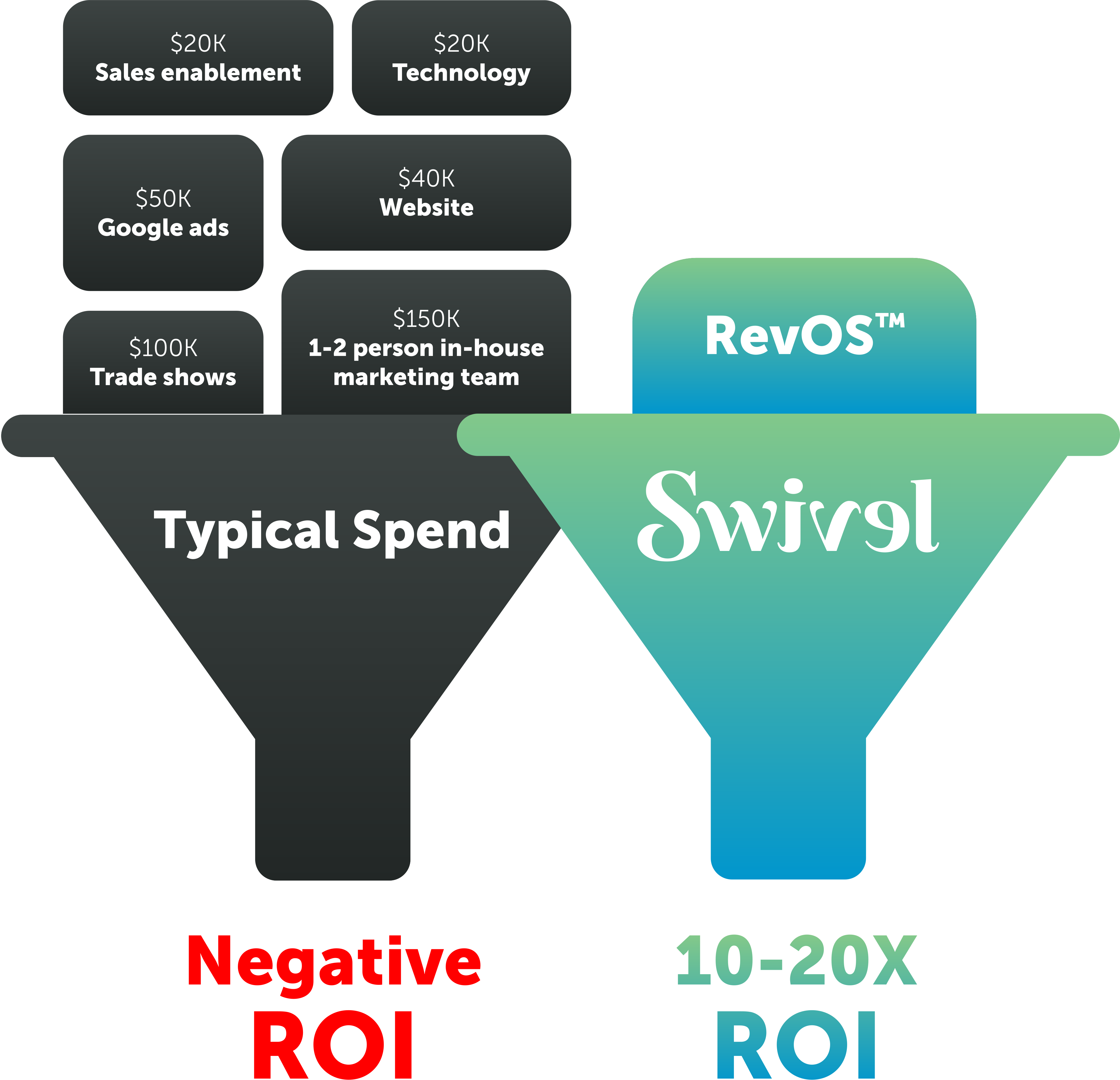
A demand generation agency creates and captures market demand — through content, paid media, and outbound — and, done right, is accountable for the quality of what it produces, not just the volume. The best fit for a B2B company is the agency that measures itself on qualified pipeline rather than leads and clicks. Swivel runs demand gen across channels and ties all of it to CPQL and closed-loop pipeline, so you can see which spend produces buyers and which just produces form fills.
What a demand gen agency should actually do
Evaluation criteria for any demand generation agency, not just Swivel:
Capture before it generates. Efficient programs harvest existing in-market demand first (bottom-funnel, high-intent), then invest in generating new demand. An agency that spends on awareness before capturing what’s already there is burning budget.
Measure quality, not just volume. Ask how they define a qualified lead and whether they report CPQL. If the scoreboard is leads and CPL, you’ll get cheap leads your sales team won’t touch.
Run across channels as one system. Google, Meta, and outbound should be coordinated and measured together, not three disconnected line items.
Close the loop to revenue. Campaign source should be traceable to pipeline and closed revenue in the CRM.
What makes Swivel different
Swivel runs demand generation as part of a connected revenue system (RevOS™), accountable to pipeline:
CPQL, not CPL. Every channel is judged on cost per qualified lead — ICP-fit leads, not form fills — so sales and marketing finally agree on what “qualified” means.
Capture-first sequencing. We harvest in-market demand efficiently before scaling generation, so budget goes where the return is fastest.
Cross-channel, coordinated. Google, Meta, and outbound run as one motion, measured together against qualified pipeline.
Closed-loop reporting. Source and campaign carried from first touch to closed-won, with ICP auto-qualification feeding the signal back to the ad platforms so they optimize toward fit.
Proof
Run as one connected system, RevOS™ has helped generate $150M+ in pipeline for B2B clients — including a 900% pipeline increase for Abre, plus 11.7x ROI and $4.6M in revenue.
Who it’s for (and who it’s not)
A good fit if: you’re spending on demand gen but can’t tell which spend produces qualified pipeline, sales dismisses your leads, or your channels run as disconnected campaigns.
Probably not a fit if: you want a single-channel specialist (say, SEO-only or paid-only) with no interest in connecting channels or measuring qualified pipeline. A point specialist may suit that better.
How to choose a demand generation agency (quick checklist)
Do they capture existing demand before spending to generate new demand?
How do they define a qualified lead — and do they report CPQL?
Do they run channels as one coordinated system or separate line items?
Can they trace campaigns to pipeline and revenue in the CRM?
Is the scoreboard qualified pipeline, or leads and clicks?
Want to see where your funnel is leaking qualified pipeline? Get a free 20-point growth audit →
Frequently asked questions
What does a demand generation agency do?
A demand gen agency creates and captures market demand through content, paid media, and outbound. Done right, it’s accountable for the quality of what it produces — qualified pipeline — not just lead or click volume. The best ones tie every campaign to revenue in the CRM.
What should I look for in a B2B demand gen agency?
One that captures existing demand before generating new demand, defines qualified leads by ICP fit and reports CPQL, runs channels as one coordinated system, and traces campaigns to pipeline and revenue. If the scoreboard is leads and CPL, you’ll get cheap leads your sales team won’t touch.
How is Swivel different from other demand gen agencies?
Swivel measures on CPQL — cost per qualified lead — not CPL or MQLs, runs Google, Meta, and outbound as one coordinated motion, sequences capture before generation, and closes the loop to revenue with ICP auto-qualification feeding fit signals back to the ad platforms.
What is CPQL and why does it matter?
CPQL is ad spend divided by ICP-qualified leads, not form fills. It’s the honest early signal of paid efficiency, because it ties spend to lead quality. A low CPL can hide a high CPQL — cheap leads that never convert — which is why demand gen should be measured on CPQL.
Should I capture or generate demand first?
Capture first. Converting buyers already in-market delivers the fastest, highest return, so a good agency harvests existing demand efficiently before investing in generating new demand to expand the pool.